Mining Security Resources
Why Independent CCTV Reviews Deliver Better Evidence
Reviewing CCTV is about far more than watching recorded footage.
People often assume that because an incident was captured by a camera, the evidence will be obvious. In practice, footage rarely explains itself.
The value comes from understanding what happened before, during and after the event—and recognising the behaviour, patterns and operational circumstances that connect those moments.
That is where an independent CCTV review can provide evidence that routine viewing may overlook.
Watching Footage Is Not the Same as Reviewing Evidence
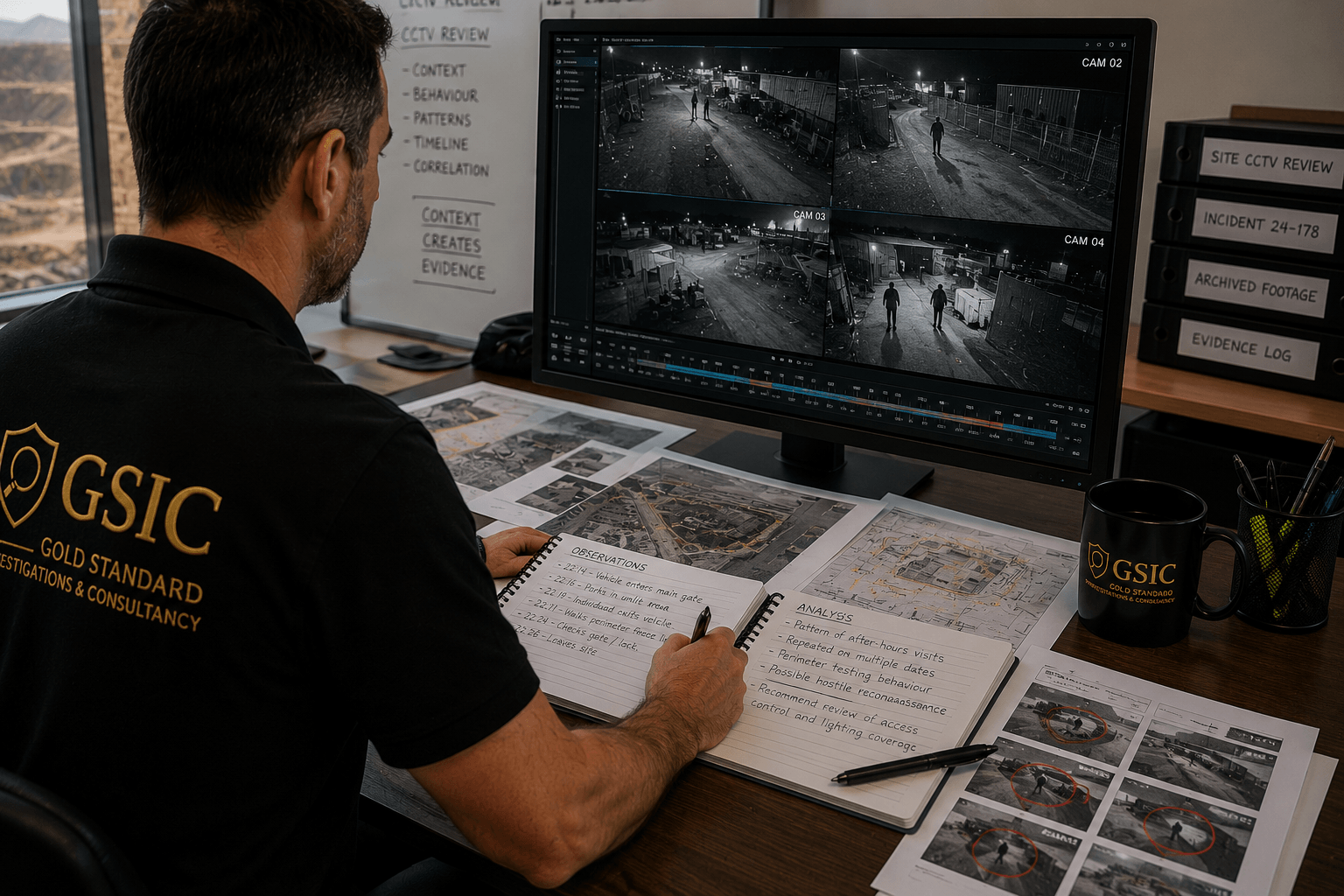
Anyone can watch CCTV footage. The more difficult task is understanding what the footage means.
A person may enter an area, speak with a colleague, move a vehicle or remain near an access point. Viewed in isolation, none of those actions may appear particularly significant.
But when they are examined alongside site routines, access records, shift activity, earlier movements and events that occur later, a very different picture may emerge.
A meaningful review does not simply ask whether the incident was recorded. It asks what the footage reveals about the incident, the people involved and the security conditions that allowed it to occur.
This requires time, objectivity and an understanding of how evidence develops across a sequence of events.
CCTV Only Tells Part of the Story
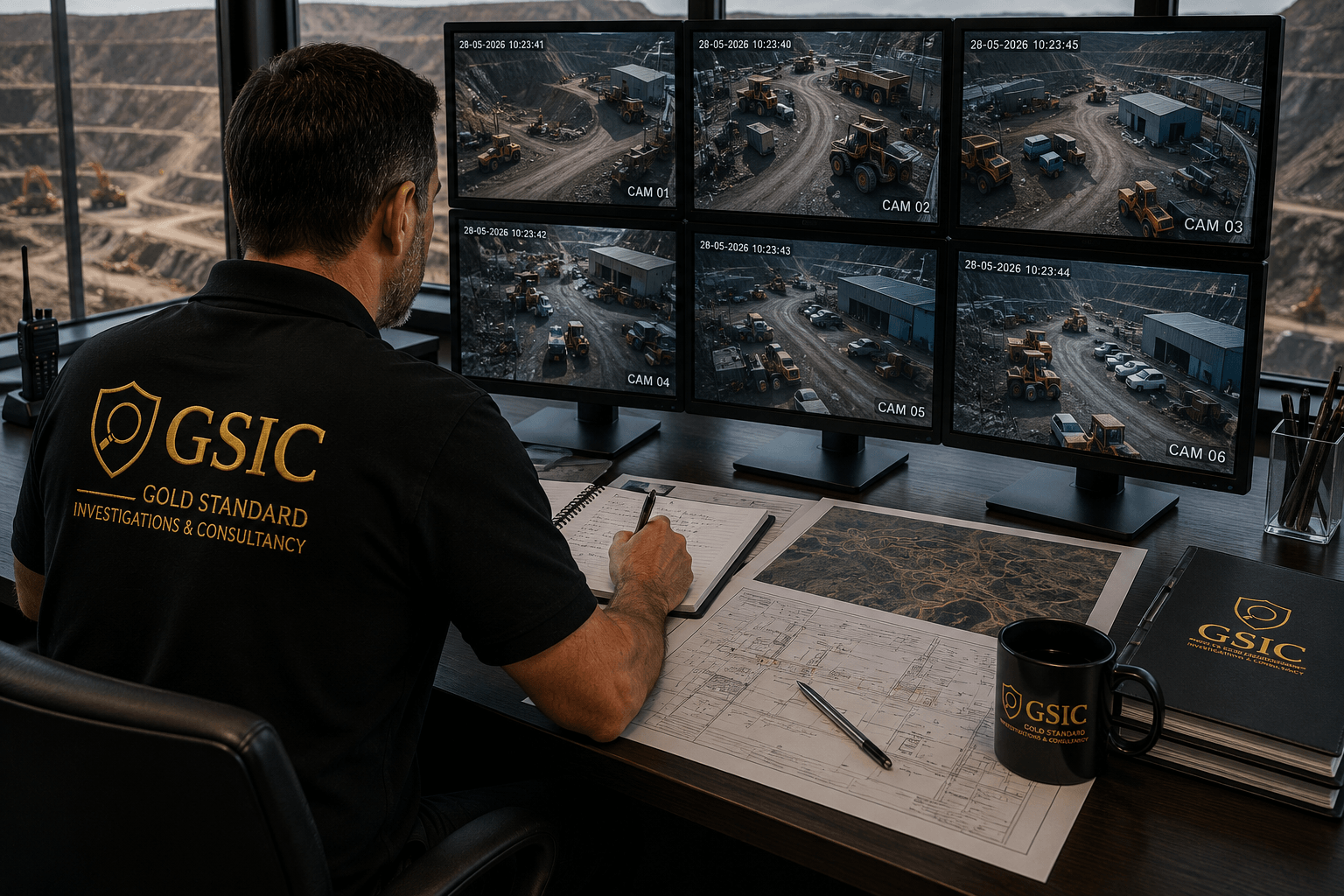
CCTV is an important source of information, but it should rarely be considered on its own.
The footage may show where somebody went, how long they remained in an area or which vehicle they used. It may not immediately explain why they were there, whether their presence was authorised or whether the same behaviour had occurred before.
Context matters.
Shift patterns, contractor arrangements, access permissions, production activity, vehicle movements and normal operating routines all influence how footage should be interpreted.
Without that operational context, unusual activity can be dismissed as normal—or ordinary activity can be treated as suspicious without proper justification.
An effective CCTV review and analysis brings the footage together with the wider circumstances surrounding the event.
Evidence is not created by cameras.
It is created through careful interpretation of what the cameras recorded.
What an Independent CCTV Review Looks For
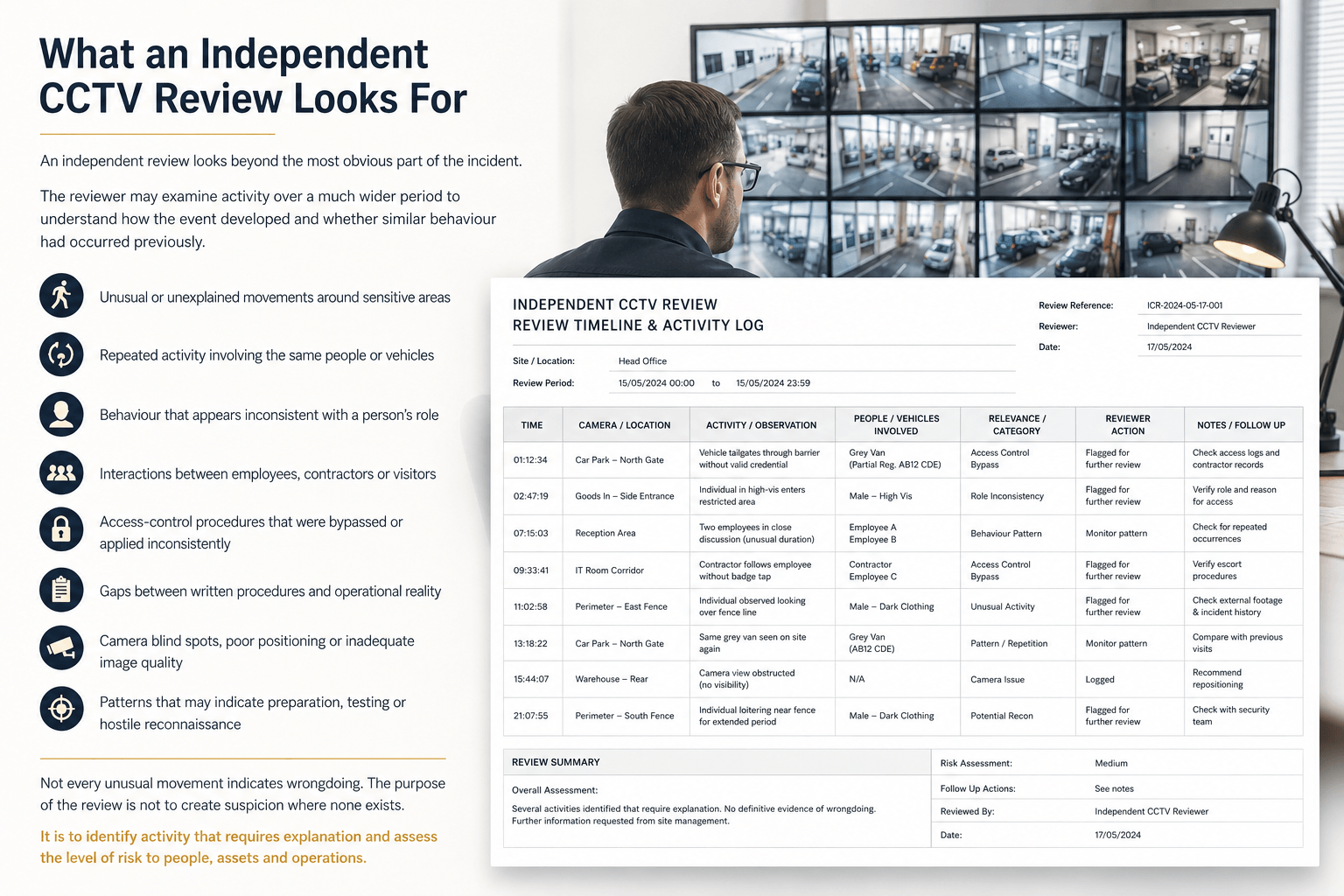
An independent review looks beyond the most obvious part of the incident.
The reviewer may examine activity over a much wider period to understand how the event developed and whether similar behaviour had occurred previously.
- Unusual or unexplained movements around sensitive areas
- Repeated activity involving the same people or vehicles
- Behaviour that appears inconsistent with a person’s role
- Interactions between employees, contractors or visitors
- Access-control procedures that were bypassed or applied inconsistently
- Gaps between written procedures and operational reality
- Camera blind spots, poor positioning or inadequate image quality
- Patterns that may indicate preparation, testing or hostile reconnaissance
Not every unusual movement indicates wrongdoing. The purpose of the review is not to create suspicion where none exists.
It is to identify activity that requires explanation and assess it objectively against the wider evidence.
━━━━━━━━
INDEPENDENT REVIEW
A stronger CCTV review connects footage with operational reality
Recorded footage becomes more useful when it is considered alongside the environment in which the incident occurred. Camera positioning, workforce movement, access arrangements and everyday site activity all influence what the images can reasonably establish.
- Compare footage across multiple cameras.
- Consider activity before and after the known incident.
- Assess whether movements align with normal operations.
- Identify gaps between expected controls and actual practice.
- Separate clear observation from reasonable inference.
This broader approach helps organisations understand both the recorded event and the security conditions surrounding it.
Select the image to open the full-size version in a new tab.
Why Internal Reviews Can Miss Important Indicators
Internal personnel understand their operation better than anyone. That knowledge is essential, but it can also influence how footage is interpreted.
People naturally develop assumptions about colleagues, contractors, routines and normal site activity. When someone or something is familiar, unusual behaviour may be explained away before it is properly examined.
This is not a criticism of internal teams. Familiarity is a normal part of working within the same environment every day.
An independent reviewer begins without those established assumptions. They are able to ask why an activity occurred, whether it was consistent with normal operations and what evidence supports the explanation.
That independent perspective can be particularly important where the incident may involve internal knowledge, trusted access or collusion between people familiar with the operation.
It can also provide management with an objective assessment that is separate from internal relationships and existing opinions.
Familiarity explains what happened yesterday.
Independent analysis asks whether the same conditions could allow it to happen again.
Archived CCTV Can Reveal More Than the Original Incident
One lesson repeated throughout investigations is that the incident first reported is not always the first incident that occurred.
A review may begin with one theft, one unauthorised entry or one unexplained loss. When earlier footage is examined, the same people, vehicles or behaviours may appear on other dates.
What initially looked like an isolated event may form part of a longer pattern.
In some investigations, reviewing archived footage has shown that offending had been occurring for weeks or months before the organisation recognised the loss.
The footage may reveal earlier preparation, repeated access, gradual testing of security controls or changes in behaviour that only become meaningful when examined retrospectively.
This is why the review period should not automatically be limited to the few minutes surrounding the known incident.
The relevant evidence may begin much earlier.

The Review Should Examine the CCTV System as Well as the Footage
A CCTV review can also identify whether the system itself supported or restricted the investigation.
A camera may be operating but still fail to provide useful evidence. Its field of view may no longer match the way the area is used. Lighting may reduce image quality. Vegetation, structures or parked equipment may obstruct the view.
Footage may be retained for too short a period, time settings may be inconsistent or exporting recordings may be more difficult than expected.
These problems often remain unnoticed until an incident occurs and the organisation attempts to retrieve evidence.
An independent review can therefore consider both questions:
- What does the available footage reveal?
- Did the CCTV system provide the evidence the organisation reasonably expected it to provide?
Where the agreed scope permits, separate recommendations can then support more effective CCTV coverage, monitoring and evidence retention.
From Recorded Footage to Defensible Evidence
For CCTV footage to support a workplace or internal investigation, the review process must be structured and capable of being explained.
Relevant sequences should be identified accurately. Timings should be checked. Observations should distinguish between what the footage shows and what the reviewer believes it may indicate.
That distinction is important.
Evidence should not be overstated, and any conclusions should remain consistent with procedural fairness. Where the footage is unclear or an explanation cannot be confirmed, that uncertainty should remain visible in the findings.
A professional review should help decision-makers understand:
- What was observed
- When the activity occurred
- How it relates to other available information
- Which conclusions are supported by the footage
- Which matters require further investigation
- What security vulnerabilities the incident exposed
This provides a stronger basis for internal decisions, workplace investigations, disciplinary processes, further enquiries and wider security risk reduction.
Frequently Asked Questions
What is an independent CCTV review?
An independent CCTV review is an objective examination of recorded footage by a reviewer who is separate from the site’s normal operating relationships and assumptions. It considers behaviour, timelines, patterns and operational context rather than simply watching the known incident.
Is CCTV review different from live monitoring?
Yes. Live monitoring focuses on activity occurring at that moment. A structured review examines recorded footage over a defined period and compares events across different cameras, times and sources of information to identify evidence and patterns.
When should CCTV footage be independently reviewed?
An independent review may be appropriate following theft, unauthorised access, unexplained loss, suspicious behaviour, a workplace incident or concerns about internal involvement. It can also be used proactively to assess whether CCTV coverage and operating practices remain effective.
Can CCTV help identify internal theft?
CCTV may assist in identifying movements, access, interactions and behavioural patterns associated with internal theft. However, footage should be assessed alongside access records, operational information, interviews and other evidence rather than relied upon in isolation.
Why use an external CCTV reviewer?
An external reviewer provides objectivity and is less influenced by familiarity with the people, routines and explanations involved. This can help identify details that have become normalised or were overlooked during the initial internal response.
Can a CCTV review identify weaknesses in the camera system?
Yes. The review may identify blind spots, unsuitable camera positioning, poor image quality, lighting problems, inadequate retention periods or difficulties retrieving footage. These findings can help improve the system’s future evidential value.
Need an Independent CCTV Review?
The presence of CCTV does not guarantee that the most important evidence will be recognised.
GSIC combines investigative experience with an understanding of mining operations to review footage objectively, identify relevant behaviour and place recorded activity within its wider operational context.
The aim is not simply to describe what appears on screen. It is to help organisations understand what happened, what the evidence supports and which vulnerabilities may require further attention.
GSIC can provide independent CCTV review and analysis as part of an investigation, an incident response or a broader mining security assessment.