Workplace Investigation Resources
When Should You Engage an External Workplace Investigator?
Not every workplace concern requires an external investigator. However, when independence, objectivity and organisational confidence become critical, engaging an experienced external investigator can significantly strengthen both the process and the outcome.
Most organisations are capable of managing routine employee matters through normal leadership and HR processes. Everyday performance issues, minor interpersonal concerns and management conversations are often best resolved internally without the need for a formal investigation.
There are, however, circumstances where asking someone within the organisation to investigate can unintentionally create questions about impartiality, conflicts of interest or the credibility of the eventual findings. Even where the investigation is conducted professionally, confidence in the process may be undermined if participants perceive it to lack independence.
An external workplace investigator brings an objective perspective, structured investigative methodology and the procedural confidence needed when matters are sensitive, complex or likely to attract scrutiny.

Not Every Investigation Needs to Be External
One of the most common misconceptions surrounding workplace investigations is that every complaint requires an external investigator. In reality, many workplace concerns can be managed effectively by experienced leaders and HR professionals using established organisational processes.
The decision to appoint an external investigator should not be driven by the seriousness of an allegation alone. It should consider whether the organisation can realistically deliver an investigation that will be viewed as impartial, procedurally fair and free from actual or perceived conflicts of interest.
Where managers have existing relationships with those involved, where senior personnel are the subject of allegations or where organisational reputation may be affected, independence often becomes just as important as investigative experience.
The objective is not to remove responsibility from managers. It is to recognise those situations where an independent perspective provides greater confidence in both the investigation process and the decisions that follow.

Situations Where an External Investigator Adds Value
There are a number of circumstances where engaging an independent investigator provides additional confidence for employees, leaders and decision-makers alike.
- Allegations involving senior managers or executives.
- Concerns involving actual or perceived conflicts of interest.
- Sensitive behavioural or psychosocial matters.
- Investigations likely to attract regulatory, legal or public scrutiny.
- Situations where employee confidence in an internal process may be limited.
- Organisations without dedicated investigation capability or specialist experience.
- Complex matters involving multiple witnesses, significant documentation or extensive evidence review.
- Investigations where independent findings will support difficult organisational decisions.
In each of these situations, independence helps ensure the investigation is viewed as objective, professionally managed and capable of supporting confident organisational decision-making.
Independence isn’t about distrusting your managers.
It’s about protecting confidence in the investigation.
What Does an External Investigator Actually Provide?
Many organisations assume the primary benefit of an external investigator is investigative experience. While that expertise is important, the greatest value often comes from independence itself.
An external investigator arrives without established workplace relationships, previous involvement in the matter or responsibility for managing the individuals concerned once the investigation concludes. This allows evidence to be assessed objectively, without the influence of existing reporting lines, organisational history or internal expectations.
Professional investigators also bring a structured approach to planning enquiries, conducting interviews, reviewing evidence and documenting findings. This consistency helps organisations demonstrate that important decisions have been reached through a transparent and defensible process rather than informal judgement.
Importantly, independence should never be confused with distance. A good investigator works collaboratively with the organisation while remaining impartial throughout the investigation.
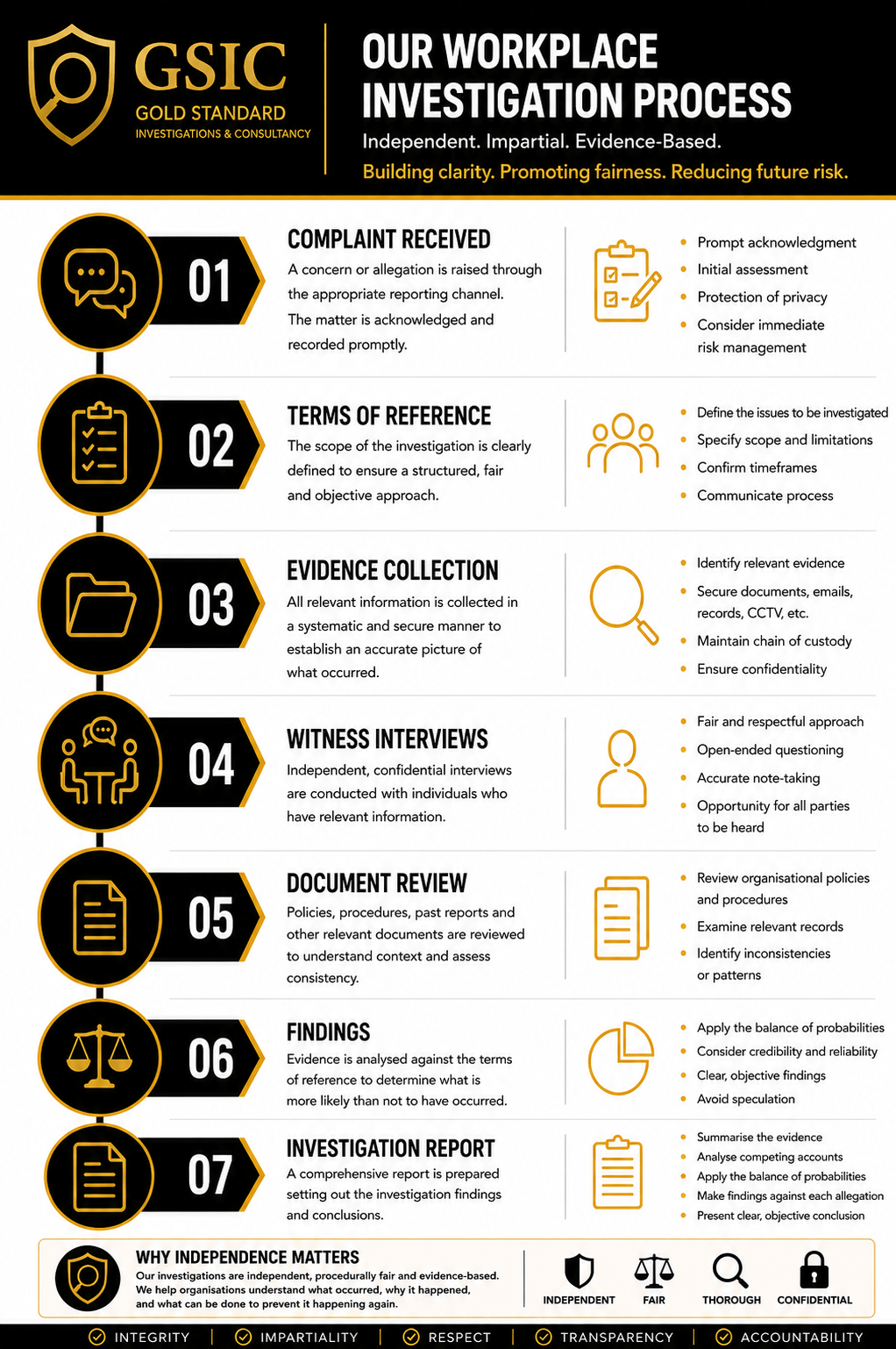
Select the infographic to open the full-size version in a new tab.

Balancing Internal Knowledge with Independent Perspective
Internal managers understand their organisation better than anyone. They know the operational environment, organisational culture and the practical realities of day-to-day work. That knowledge is invaluable when managing people.
There are occasions, however, where that same familiarity can unintentionally influence how an investigation is perceived. Existing relationships, previous workplace history and organisational expectations may all create concerns about impartiality, even where everyone involved acts professionally.
An external investigator provides a fresh perspective that is focused entirely on the available evidence. They assess information without prior assumptions, organisational loyalties or personal involvement in workplace relationships. This strengthens confidence in both the investigation itself and the decisions that follow.
For many organisations, engaging an external investigator is therefore less about capability and more about credibility.
The value of an independent investigator isn’t that they know your organisation.
It’s that they don’t.
Choosing the Right Time to Engage an External Investigator
Organisations do not need to wait until a matter has become unmanageable before seeking independent support. In many cases, engaging an external investigator early helps establish confidence in the process from the outset and reduces the likelihood of procedural concerns developing later.
Early engagement can be particularly valuable where allegations involve senior personnel, multiple departments, psychosocial issues or circumstances where employee confidence in an internal investigation may already be affected.
Seeking independent assistance should never be viewed as an admission that internal managers cannot investigate. Rather, it reflects a commitment to good governance, procedural fairness and ensuring the investigation is conducted in a manner that supports everyone involved.
Frequently Asked Questions
When should I use an external workplace investigator?
An external investigator is most appropriate where independence is essential to maintaining confidence in the investigation. This commonly includes matters involving senior personnel, conflicts of interest, significant organisational risk or situations where findings may later be scrutinised.
Can internal managers still conduct investigations?
Yes. Many workplace concerns are appropriately managed internally. An external investigator is generally engaged when independence, specialist experience or additional procedural confidence would benefit the organisation and those involved.
Will using an external investigator make the process more formal?
Not necessarily. Professional investigators adapt their approach to the circumstances. The aim is not to make matters unnecessarily formal but to ensure enquiries remain structured, objective and proportionate to the issues being examined.
Do external investigators make disciplinary decisions?
No. An investigator establishes the facts and reports what the evidence supports. Decisions regarding employment outcomes or organisational action remain the responsibility of the employer.
Can an external investigator help with psychosocial matters?
Yes. Independent investigators are frequently engaged to investigate workplace behaviour, bullying, harassment and other psychosocial concerns where impartiality and procedural fairness are particularly important.
Is engaging an external investigator a sign that the organisation has failed?
Quite the opposite. Seeking independent support demonstrates a commitment to good governance, procedural fairness and making decisions based on objective evidence rather than organisational perception.
Independence doesn’t replace good leadership.
It reinforces confidence in difficult decisions.
Independent Workplace Investigation Support
GSIC supports organisations across Australia by conducting independent workplace investigations where confidence, objectivity and procedural fairness are essential. We work alongside organisations to establish the facts, protect the integrity of the investigation process and provide balanced findings that support informed decision-making.
Whether your organisation operates within mining, local government, corporate or public sector environments, we provide experienced investigators who understand the importance of independence without disrupting day-to-day operations.