Workplace Investigation Resources
Investigating Psychosocial Workplace Risks
Independent workplace investigations help organisations understand what occurred, identify contributing organisational factors and reduce future workplace risk.
Workplaces have always managed physical hazards. Increasingly, organisations are expected to manage psychosocial hazards with the same level of diligence.
When allegations of bullying, harassment, discrimination, misconduct or other workplace issues arise, organisations face more than simply resolving a complaint. They need a process that establishes the facts, treats everyone fairly and provides confidence that decisions are based on evidence rather than assumption.
GSIC conducts independent workplace investigations across mining, government, local government and commercial organisations. Every investigation is evidence-based, procedurally fair and designed to assist organisations in understanding what occurred and identifying relevant contributing factors. Where the agreed scope permits, separate advice may also help the organisation consider opportunities to reduce future workplace risk.

Psychosocial Risks Are Becoming Increasingly Important
Across Australia, organisations are recognising that workplace health extends beyond physical safety. The way work is designed, managed and experienced can have a significant impact on the psychological wellbeing of workers, contractors and leaders.
For employers, this means psychosocial risks are no longer viewed simply as human resources matters. They form part of broader workplace health and safety responsibilities that require organisations to identify hazards, assess risks and take reasonably practicable steps to minimise harm.
Where concerns are raised, organisations are increasingly expected to demonstrate that they responded appropriately, investigated objectively and made decisions based upon evidence rather than opinion.
An independent workplace investigation provides that structured approach. Rather than beginning with assumptions, it establishes the facts, considers the available evidence and assists decision makers in understanding what occurred before determining the most appropriate course of action.

Psychosocial Risks Are Broader Than Workplace Bullying
When people hear the term psychosocial hazards, workplace bullying is often the first issue that comes to mind. While bullying remains an important concern, it represents only one aspect of a much broader category of workplace risks.
Psychosocial hazards may arise from the way work is organised, managed or experienced, as well as from interactions between people within the workplace.
- Bullying and unreasonable behaviour
- Harassment and sexual harassment
- Discrimination and victimisation
- Aggressive or threatening behaviour
- Poor supervision or inadequate support
- Fatigue and excessive working hours
- Remote or isolated work environments
- Exposure to traumatic incidents
- High job demands and workload pressures
- Poorly managed organisational change
- Interpersonal conflict
- Workplace misconduct
Not every workplace concern results in a finding of misconduct. Likewise, not every psychosocial issue requires disciplinary action. The purpose of an investigation is to understand what occurred, identify contributing factors and determine whether organisational policies, procedures or standards have been breached.
━━━━━━━━
STRUCTURED INVESTIGATION
A fair process establishes facts before organisational decisions are made
Psychosocial workplace matters can involve conflicting accounts, sensitive personal information and significant consequences for everyone involved. A structured process helps ensure that evidence is gathered consistently and that conclusions are not shaped by assumptions made at the outset.
- Clear Terms of Reference.
- Relevant evidence collection.
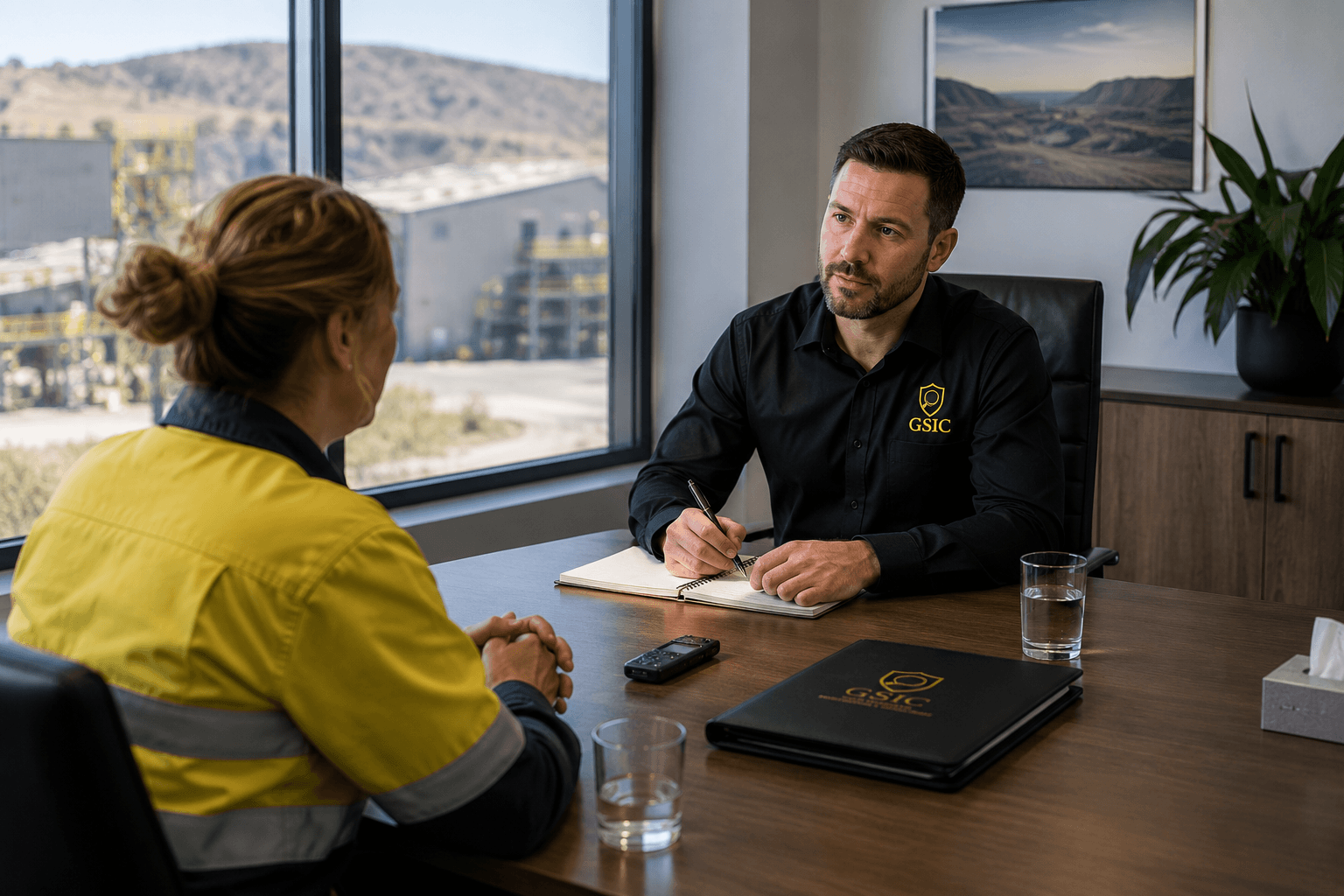
- Professional witness interviews.
- Document and record review.
- Balanced, evidence-based findings.
The investigation establishes what the evidence supports. The organisation then decides what action, if any, should follow.
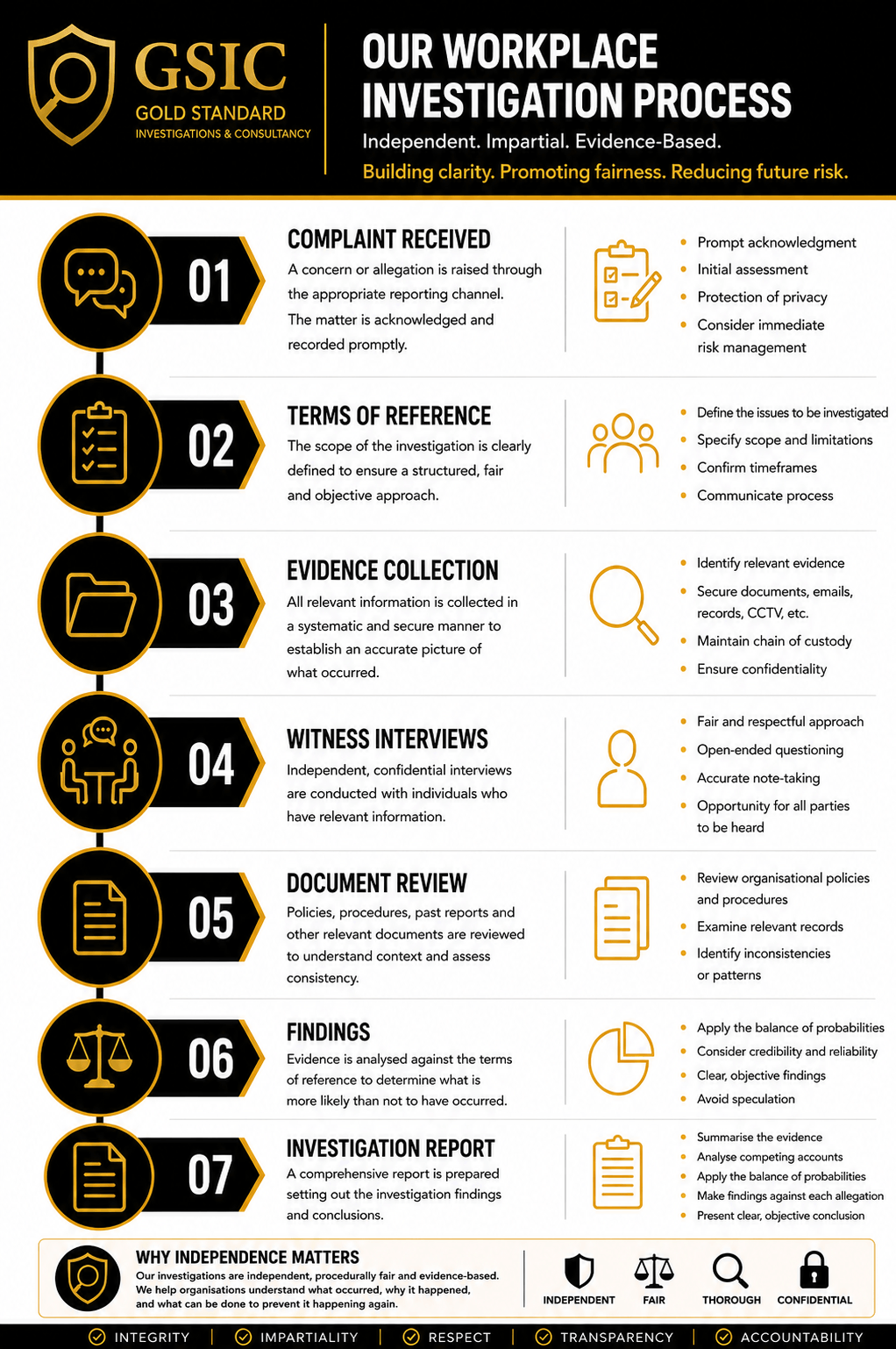
Select the infographic to open the full-size version in a new tab.
Every allegation deserves fairness.
Every investigation deserves evidence.
When Does a Workplace Investigation Become Necessary?
Not every workplace concern requires a formal investigation. Many issues can be resolved through early intervention, effective supervision or informal management processes.
However, where allegations are serious, disputed or may expose an organisation to legal, operational or reputational risk, a structured investigation often becomes the most appropriate way to establish the facts.
An investigation provides organisations with an evidence-based understanding of what occurred, allowing decisions to be made fairly and consistently rather than relying on assumptions, workplace rumours or conflicting opinions.
Common situations where organisations appoint an independent investigator include:
- Workplace bullying allegations
- Sexual harassment complaints
- Discrimination or victimisation allegations
- Serious interpersonal conflict
- Misconduct investigations
- Repeated employee grievances
- Concerns regarding leadership or supervision
- Anonymous complaints
- Critical workplace incidents
- Potential breaches of workplace policies
- Matters requiring an independent and impartial assessment
Importantly, appointing an independent investigator should never be viewed as an indication that wrongdoing has occurred. It demonstrates that the organisation is committed to understanding the facts through a fair and transparent process.
What Does an Independent Workplace Investigation Actually Do?
Every investigation is unique, but the underlying process remains consistent. The objective is not to prove or disprove allegations from the outset. It is to collect evidence objectively and determine what conclusions are supported by that evidence.
A professional investigation considers considerably more than individual allegations. It seeks to understand the broader organisational context, how decisions were made and whether workplace systems contributed to the issues being examined.
Depending on the circumstances, an investigation may examine:
- Exactly what occurred
- The available documentary and physical evidence
- Witness accounts and supporting information
- Relevant workplace policies and procedures
- Whether organisational standards were followed
- Whether allegations can be substantiated
- Contributing organisational factors
- Underlying workplace behaviours and culture
- Practical opportunities to reduce future risk
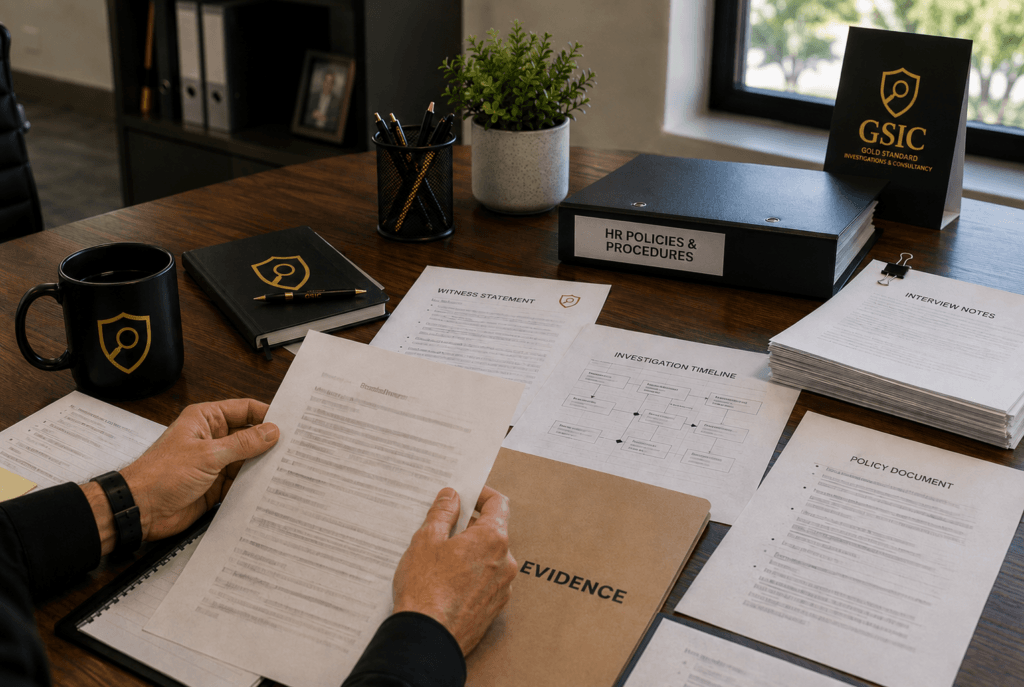
Evidence may include interviews, documents, emails, policies, CCTV footage, electronic records, workplace observations and other relevant material depending on the nature of the investigation.
The resulting findings should be transparent, evidence-based and capable of being understood by both decision makers and those directly involved in the investigation.
An investigation should establish facts.
It should never begin by trying to confirm assumptions.
Why Independence Matters
One of the greatest strengths of an independent investigation is objectivity.
Internal investigators often possess valuable organisational knowledge. They understand workplace history, reporting lines, personalities and previous events. While that knowledge can be helpful, it can also unintentionally influence how evidence is interpreted.
An independent investigator approaches the matter without existing workplace relationships or preconceived opinions. Every witness is treated consistently, every allegation is assessed against the available evidence and every conclusion must be capable of being justified through a process grounded in procedural fairness.
This independence builds confidence for everyone involved. Employees know their concerns have been considered impartially, while organisations gain confidence that the findings are supported by evidence rather than workplace assumptions.
Equally important, independent investigations often identify broader organisational issues that may not be immediately connected to the original complaint. Improvements to supervision, communication, policy implementation or workplace culture can frequently reduce the likelihood of similar issues arising in the future.

Independence protects the integrity of the investigation.
Evidence protects the integrity of the outcome.
Psychosocial Risks Within Mining Operations
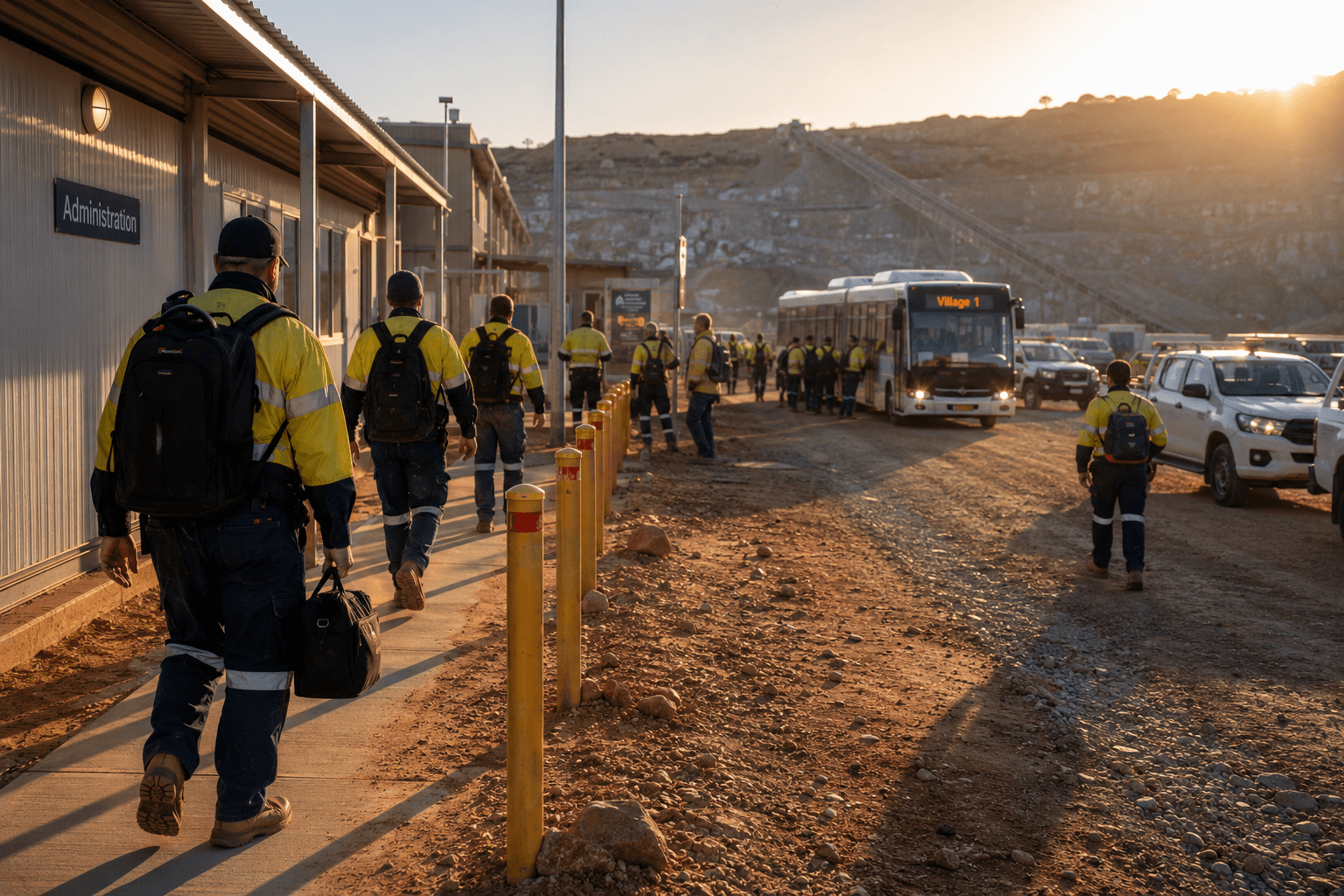
Every workplace presents its own challenges, but mining environments often combine operational, environmental and social factors that can significantly influence psychosocial risk.
Remote locations, extended rosters, physically demanding work, production pressures and prolonged periods away from family can all contribute to increased stress within the workplace. These pressures do not automatically result in workplace issues, but they can influence how individuals respond to conflict, fatigue, supervision and interpersonal relationships.
Mining organisations therefore face a unique challenge. They must not only maintain high standards of physical safety but also ensure that workplace behaviours, leadership practices and organisational systems support psychological wellbeing.
Common psychosocial issues encountered within mining environments may include:
- FIFO and roster-related pressures
- Fatigue and extended working hours
- Remote and isolated workplaces
- Workplace bullying
- Sexual harassment
- Poor supervision or leadership practices
- Aggressive or intimidating behaviour
- Drug and alcohol related concerns
- Exposure to traumatic workplace events
- Interpersonal conflict within close working environments
These issues often overlap. A complaint that initially appears to involve interpersonal conflict may reveal broader concerns regarding supervision, communication, workload or organisational culture.
The objective is not simply to determine what happened.
It is to understand why it happened and reduce the likelihood of it happening again.
Investigations Should Improve Organisations, Not Simply Allocate Blame
Many people associate workplace investigations with determining whether allegations are substantiated. While this remains an important outcome, it should rarely be the end of the process.
A well-conducted investigation often identifies broader organisational lessons that extend beyond the individuals directly involved. Policies may require clarification, supervision may need strengthening, communication processes may need improvement or workplace expectations may require reinforcement.
For this reason, investigation findings can also inform a separate organisational review of the broader lessons arising from the matter. Where the agreed scope permits, practical recommendations may then be developed to help reduce future workplace risk.
Depending on the circumstances and agreed scope, separate recommendations may include:
- Reviewing workplace policies and procedures
- Leadership coaching and supervisory support
- Additional workplace training
- Improved reporting pathways
- Communication improvements
- Operational process changes
- Workforce education regarding respectful behaviours
- Improved documentation and record keeping
- Risk management initiatives
- Ongoing organisational monitoring
By identifying these opportunities, investigations become more than a response to a complaint. They become an opportunity for organisational learning and continuous improvement.

Understanding Western Australia’s Psychosocial Duties
Western Australia’s Work Health and Safety (General) Regulations 2022 define a psychosocial hazard as one that arises from the design or management of work, the work environment, workplace interactions or behaviours and has the potential to cause psychological harm.
In practical terms, organisations are expected to identify psychosocial hazards, assess the associated risks and implement reasonably practicable control measures to eliminate or minimise those risks wherever possible.
Where workplace concerns develop into formal allegations or significant organisational issues, an independent investigation can assist organisations in understanding what occurred, assessing whether workplace systems contributed to the issue and identifying practical improvements moving forward.
Further guidance is available through the WorkSafe Western Australia website and the associated Code of Practice for managing psychosocial hazards at work.
Good investigations resolve today’s issues.
Great investigations help prevent tomorrow’s.
Frequently Asked Questions
What is a psychosocial workplace investigation?
A psychosocial workplace investigation is an independent examination of workplace concerns that may involve bullying, harassment, discrimination, victimisation, misconduct or other organisational factors capable of causing psychological harm. The purpose is to establish the facts, assess the available evidence and provide organisations with objective findings. Where the agreed scope permits, separate recommendations may also be provided.
When should an organisation appoint an independent investigator?
An independent investigator may be appropriate where allegations are serious, involve senior personnel, present potential conflicts of interest or require an objective assessment that is separate from existing workplace relationships. Independence helps build confidence in both the investigative process and the resulting findings.
What evidence is considered during a workplace investigation?
The evidence considered depends on the circumstances of each investigation. It may include witness interviews, workplace policies, emails, electronic records, CCTV footage, personnel documents, photographs, operational records and other information relevant to the allegations being examined.
Are workplace investigations confidential?
Investigations should be managed confidentially wherever reasonably practicable. Information is generally shared only with those who have a legitimate need to participate in or make decisions arising from the investigation, while recognising that procedural fairness requires relevant information to be disclosed where appropriate.
Do psychosocial investigations only relate to bullying?
No. Bullying is only one example of a psychosocial workplace issue. Investigations may also involve harassment, sexual harassment, discrimination, victimisation, fatigue, poor supervision, workplace conflict, aggressive behaviour, remote work challenges and other organisational factors that may create psychological risk.
Can workplace investigations improve organisational culture?
Yes. While investigations determine what occurred and whether workplace standards were breached, they also identify opportunities to improve policies, leadership, supervision, communication and workplace systems. This allows organisations to reduce future risk while strengthening workplace culture.
Why are psychosocial risks particularly important in mining?
Mining environments often combine remote locations, FIFO rosters, fatigue, production pressures and prolonged periods away from family. These factors can increase psychosocial risks and make early identification, effective leadership and independent investigations particularly important when workplace concerns arise.
Need an Independent Workplace Investigation?
When workplace concerns arise, organisations need more than opinions. They need a fair, objective and evidence-based process that helps establish what occurred while providing confidence in the outcome.
GSIC conducts independent workplace investigations into bullying, harassment, discrimination, victimisation, misconduct and broader psychosocial workplace issues across mining, local government, government and commercial organisations.
Every investigation is conducted with procedural fairness and supported by evidence. Where appropriate to the agreed scope, separate advice may also help organisations consider how future workplace risk can be reduced.
Our services can also support broader Mining Security Consultancy, Operational Security Awareness Sessions, CCTV Review & Analysis and Workplace & Internal Investigations, providing organisations with practical advice that strengthens both workplace culture and organisational resilience.