
Workplace Investigation Resources
Why Procedural Fairness Protects Everyone Involved
Procedural fairness ensures workplace investigations are conducted impartially, transparently and with a genuine opportunity for relevant parties to respond.
When concerns arise in the workplace, organisations are often under pressure to act quickly. Employees may want answers, managers may need to make decisions and operational disruption may already be affecting the wider organisation.
That urgency is understandable. However, a workplace investigation must still be conducted fairly. Decisions reached through an incomplete, inconsistent or predetermined process can create more risk than the original concern.
Procedural fairness protects the person raising the concern, the person responding to it and the organisation responsible for deciding what happens next. It creates a process in which findings are based on evidence rather than assumption and where everyone involved can have confidence that the matter has been handled properly.

What Is Procedural Fairness?
Procedural fairness is the principle that people affected by a workplace investigation should be treated impartially and given a reasonable opportunity to understand and respond to the relevant concerns.
It does not guarantee a particular outcome, nor does it mean every participant will agree with the final findings. Its purpose is to ensure that the process used to reach those findings is balanced, consistent and capable of being explained.
In practical terms, procedural fairness requires the investigator to remain open-minded, gather relevant evidence, test conflicting accounts and avoid reaching conclusions before the available information has been properly considered.
It also requires organisations to distinguish between the investigation and the decision that follows. The investigator establishes what the evidence supports. The employer then determines what organisational response, if any, is appropriate.
This separation is important because a fair investigation should not be shaped around a decision that has already been made.
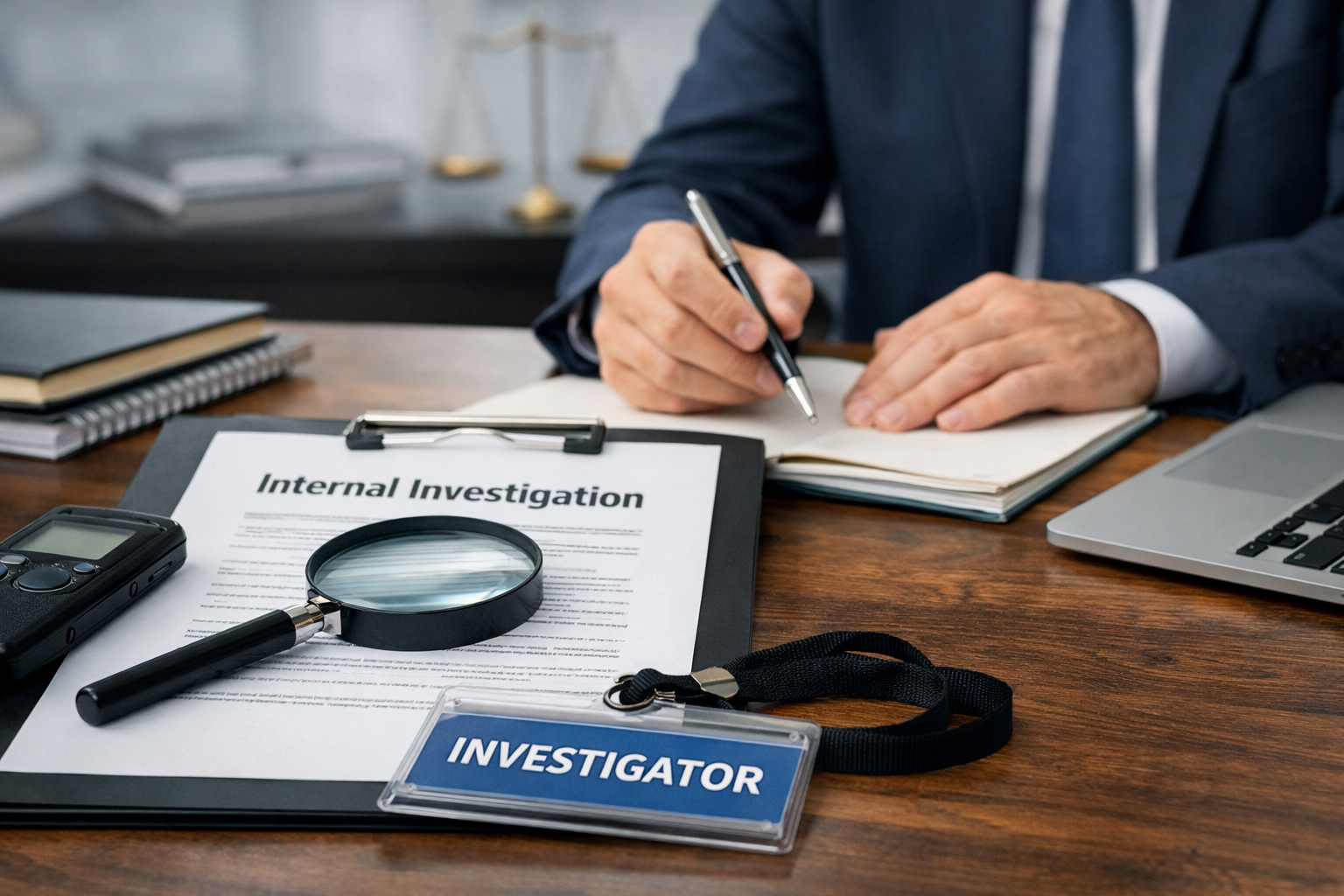
The Core Principles of a Fair Investigation
While every investigation must be adapted to the circumstances, several principles consistently underpin a fair and defensible process.
Impartiality
The investigator must approach the matter without prejudging the outcome. Existing workplace relationships, seniority, reputation or assumptions about the people involved should not determine how evidence is assessed.
A Reasonable Opportunity to Respond
Where findings may affect an individual, that person must be given a meaningful opportunity to respond to the relevant allegation or adverse information before conclusions are finalised.
Evidence-Based Findings
Findings should reflect the available evidence, not workplace opinion, speculation or pressure to reach a preferred result. Where evidence is limited or conflicting, the report should make that clear.
Consistency
The process should be applied fairly across the people involved. Similar evidence should be assessed using the same standards, regardless of role, position or perceived organisational importance.
Appropriate Transparency
Participants should understand the nature of the process, their role within it and what will happen next. Confidentiality remains important, but it should not be used in a way that prevents a fair response.
A fair investigation does not seek to prove a theory.
It tests what the evidence supports.
Procedural Fairness Is Applied Throughout the Investigation
Procedural fairness is often misunderstood as a single step within an investigation. In reality, it is a principle that should influence every stage of the investigative process from the initial Terms of Reference through to the final report.
Investigators must continually assess whether evidence has been gathered objectively, whether additional enquiries are required and whether those affected have been provided with a genuine opportunity to contribute relevant information.
This does not mean every request made by participants must be accepted, nor does it require every piece of information to be treated equally. Professional judgement remains essential. Procedural fairness requires investigators to consider what is relevant, proportionate and necessary in the circumstances before reaching evidence-based findings.
When fairness is embedded throughout the investigation rather than considered only at the end, organisations are far better placed to make decisions that are credible, transparent and capable of withstanding future scrutiny.
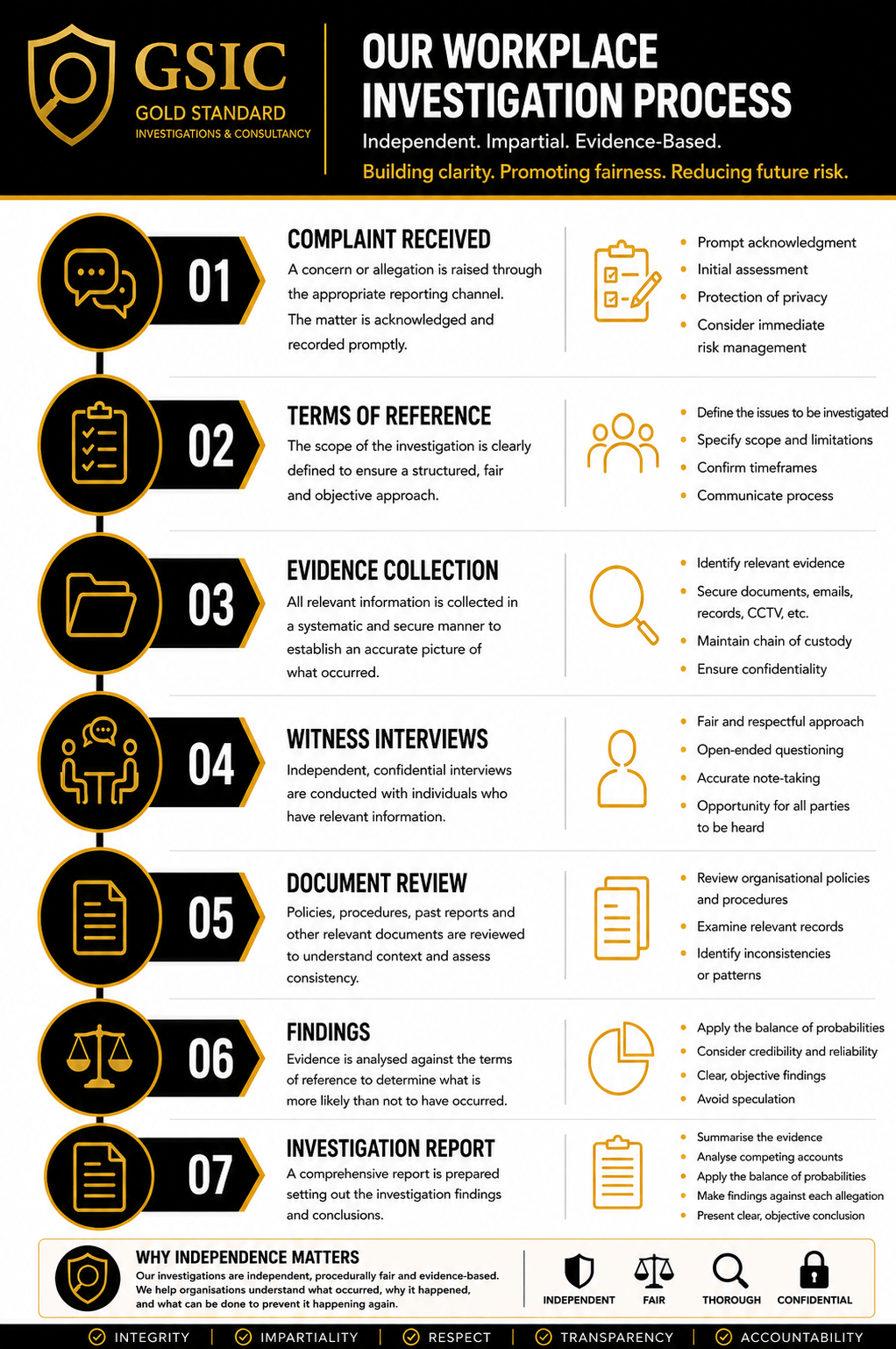
Select the infographic to open the full-size version in a new tab.

Why Procedural Fairness Matters
A procedurally fair investigation does more than protect the individuals directly involved. It also protects the organisation by providing confidence that decisions have been reached through a structured and objective process.
Where investigations are perceived as biased, incomplete or predetermined, confidence in the outcome can quickly diminish regardless of whether the findings themselves are accurate. Conversely, when participants understand they have been treated fairly and their information has genuinely been considered, organisations are better placed to maintain trust throughout the process.
This is particularly important in workplaces where employment decisions, reputational issues or psychosocial risks may have long-term consequences for individuals and the organisation alike.
Procedural fairness therefore strengthens governance, reduces organisational risk and supports decisions that can be confidently explained if later reviewed or challenged.
People may not always agree with the outcome.
They should always be able to understand the fairness of the process.
What Organisations Should Expect From a Fair Investigation
Organisations engaging an investigator should expect a process that is planned, documented and proportionate to the issues being examined. Every investigation will differ, but the principles of fairness should remain consistent regardless of industry, workforce size or operational complexity.
A professionally managed investigation should include clearly defined Terms of Reference, appropriate evidence gathering, structured interviews, balanced assessment of the available information and reporting that explains how findings have been reached.
Importantly, procedural fairness is not about avoiding difficult findings or protecting particular individuals. It is about ensuring conclusions are supported by evidence rather than assumption, and that organisational decisions are built upon a process that can be confidently defended if questioned.
That level of integrity benefits everyone involved and helps organisations strengthen both workplace confidence and long-term governance.
Frequently Asked Questions
Does procedural fairness mean everyone must agree with the outcome?
No. Procedural fairness relates to the integrity of the investigation process rather than whether participants agree with the final findings. A fair investigation allows relevant information to be considered objectively before conclusions are reached.
Can an investigation still find that allegations are substantiated?
Yes. Procedural fairness does not prevent investigators reaching adverse findings where supported by evidence. It simply ensures those findings are reached through a balanced and defensible process.
Why is independence important?
An independent investigator brings objectivity to the process and reduces concerns that existing workplace relationships, reporting lines or organisational pressures may influence the assessment of evidence.
Does procedural fairness slow investigations down?
Not necessarily. Fair investigations are generally well planned and efficiently managed. While additional enquiries may occasionally be required, following a structured process often avoids delays caused by incomplete evidence or decisions that later require review.
Can procedural fairness reduce organisational risk?
Yes. Investigations conducted fairly and objectively provide organisations with greater confidence that subsequent decisions are evidence-based, transparent and capable of being explained if challenged.
Is procedural fairness relevant to psychosocial investigations?
Absolutely. Matters involving workplace behaviour, interpersonal conflict and psychosocial hazards often require particularly careful management to ensure all participants are treated fairly and relevant evidence is assessed objectively.
Confidence in an investigation comes from confidence in the process.
Procedural fairness is what gives that process credibility.
Independent Workplace Investigations Built on Procedural Fairness
GSIC conducts independent workplace investigations throughout Australia for mining companies, local government, corporate organisations and the broader public sector. Every investigation is designed to establish the facts objectively while maintaining procedural fairness for everyone involved.
Our investigations provide organisations with balanced findings and defensible reporting that support informed decision-making and strengthen organisational governance.
